New York - Verticals, Villages, and an Old Address
There are cities you visit and cities you carry. New York is the second kind for me, because I spent two years here as a graduate student at NYU, learning computer science by day and learning the city itself by accident. I have been back several times since, but this was the first proper trip back with my wife, and it had the strange double-vision of every return: the city is exactly as I remembered it, and it is also completely different.
We had a few days. Late autumn, the kind where the light goes gold by four in the afternoon and the trees in the parks are halfway through their show. New York does autumn well, in part because it has the trees to do it with, and in part because the contrast against the stone and steel is so sharp.
A City That Looks Up
The first thing New York asks of you is that you look up. From almost any block in Manhattan, the verticals close in: glass towers on one side, prewar limestone on the other, water towers and antennae poking out the top of buildings that are themselves already too tall. The city's defining geometric trick is to make every street into a slot canyon, with weather running along it in patterns you can almost predict.
We did the obvious downtown loop on the second day. Wall Street, the Stock Exchange with its flags and its tiny Fearless Girl staring it down across the cobbles, the long limestone canyons of the Financial District where the morning light turns the brass plaques the colour of honey. There is a particular sound to those blocks early in the day, when the office crowd is still arriving and the streets are quiet enough that you can hear the flags overhead.
Wall Street, Fearless Girl, and the flags
Midtown is the louder version of the same thing. Times Square is exactly the assault on the senses it is supposed to be, and the giant illuminated BROADWAY letters at the south end of the square felt like the city had finally stopped pretending it was subtle about anything. We did not linger. Grand Central was the antidote two blocks east, which is a place I never quite get tired of: that ceiling of stars, the chandeliers, the American flag hung enormous over the main hall, the way every footstep sounds in the right key. You step in from the chaos of 42nd Street and the building does something to your shoulders.
A City That Looks Down (at Itself)
For every block of verticals, there is a block of detail. The other New York, the one you only get if you slow your pace down, is at street level. Cobblestones, fire escapes, the iron railings around basement entrances, the little flower-covered coffee kiosks that someone has clearly poured a lot of love into. We found one of those on a corner near Madison Square, all painted green and trailing cherry blossoms in a way that felt unreasonable for a structure that is essentially a glorified vending machine.
A coffee kiosk dressed for spring, somewhere off 5th
Tribeca was the surprise of the trip. I had walked through it dozens of times as a student and never really looked. This time we wandered down to Staple Street, the tiny cobbled alley with the green pedestrian skybridge connecting two old hospital buildings overhead. Standing under that bridge with the brick walls closing in and the morning sun slicing across the cobbles is one of those moments where the city quietly shows off. It is also one of the most photographed corners in Manhattan now, which is fair, and which we contributed to without apology.
The High Line is the same idea at a different scale. A retired elevated rail line turned into a long, planted walk above the streets of the West Side. From up there you see Chelsea Market's giant red MARKET sign, the Hudson on your left, the tops of buildings you would otherwise walk past. We did most of it on a Saturday morning. The plants were turning, and the light kept catching on the windows of the new towers in Hudson Yards in a way that made the whole walk feel like a slow-motion lens flare.
An Old Address
There is a stretch of Washington Square that I cannot walk through without it doing something to my chest. The arch at the north end, the fountain in the middle, the chess tables on the south side that always have someone hunched over them no matter the season, the smell of pretzels and weed and damp leaves all at the same time. This was my park for two years. NYU's purple banners are still everywhere along the edges. Bobst is still where I left it. The buildings on the east side where I lived in a tiny apartment with a tiny window have not changed in any meaningful way, and that itself was a surprise.
Washington Square, late afternoon
We sat by the fountain for an hour. My wife was patient with me, which I appreciated, because I was doing the thing where you point at buildings and tell stories about people you have not thought about in years. The strange part was not how much had changed. The strange part was how little. The skateboarders are still the same age. The street musicians are in different combinations but the same locations. The dogs at the dog run still look like New York dogs.
The neighborhood around the park, the West Village, has gotten a little more polished and a little more expensive. Some of the bookstores have gone. Some of the cafes have changed hands. But the bones are the same. You can still wander west and hit the old brownstones, you can still find a hidden garden on a street you do not remember, and the streets still bend in those unexpected ways that mark the village out from the rest of the grid. I had forgotten how much I missed those bent streets.
The Park
If Washington Square is a neighbourhood park, Central Park is something else entirely. It does not feel like a park inside the city. It feels like the city was built around a piece of countryside that refused to leave. We did the lower loop one morning, from the south end up through the Mall to Bethesda Terrace, and another afternoon's wander up to Bow Bridge.
Bow Bridge in late autumn
Bow Bridge in late autumn is the most New York thing I know. The bridge itself is small and cast iron and elegant. The lake reflects the trees that are halfway through changing colour. The skyline rises out of the foliage in the distance, with one tall tower poking up above the others like it forgot to consult the planning department. People on the bridge are taking photos in five different languages at once. The boats are still rowing, even though half the leaves are already in the water. It is the moment where the city's two competing energies, the wild and the engineered, agree to share the same frame.
Liberty, the Memorial, and a Dinner We Are Still Talking About
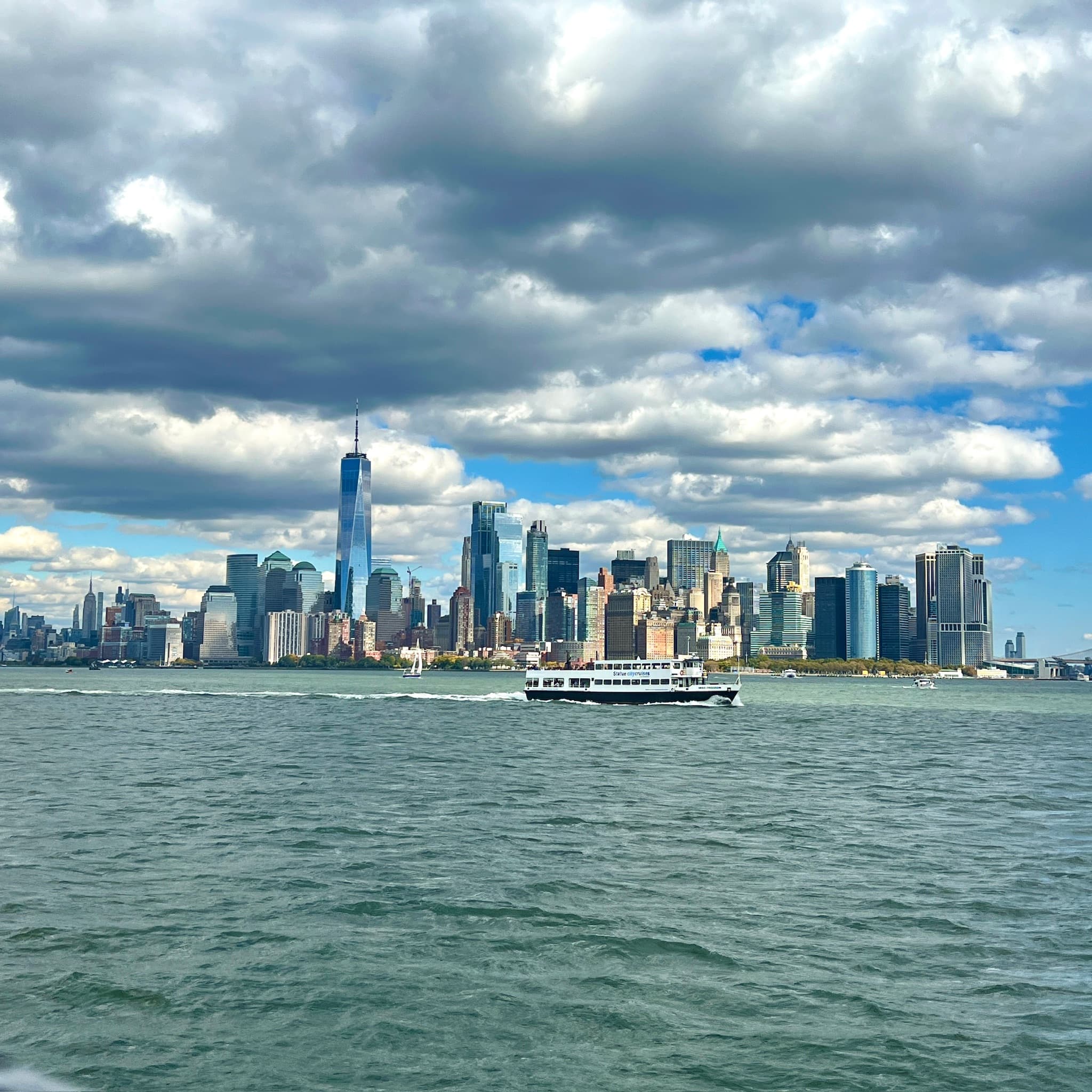
Two more stops anchored the trip. The ferry out past the Statue of Liberty is something every New Yorker tells you is overrated until they go again, and then they remember. She is bigger than you remember, and greener, and looks somehow more serious than the photos imply. We stood at the rail of the boat in a sharp wind and did not say much for a few minutes.
The 9/11 Memorial is what it has always been. The two pools where the towers stood are still the most affecting piece of public space in the city. Water falling into a void at exactly the footprint of what was lost, with One World Trade Center standing above it in clean glass, doing the work of looking forward without pretending the past is not still there. We did not stay long. You do not stay long.
We ended the trip at Bungalow on East 1st. I had heard about it before we came, and we booked in early. It is an Indian restaurant in a city that has many Indian restaurants, and it is not Indian in the way most of them are. The room is warm, the lighting is low, the service is unhurried in a way that makes you slow down to match. The food is sharp and confident and not quite like anything I have eaten anywhere else. We had a black-dal that took eight hours to make and tasted like it. My wife is not someone who is easy to impress with a meal. She was impressed with this meal. We are still talking about it.
Coming Back
New York is too many cities at once. That is its main feature and also the reason it is exhausting. On any given day you can do the verticals and the villages and the parks and the museums, and still leave with the feeling that you have only scratched the surface. The trip back with my wife was partly about showing her the city I used to live in, and partly about discovering, again, that the city I used to live in is also still the city. New York does not wait for you. It also does not forget you, exactly. It does that thing where it carries on without missing a beat, and then it makes a small space for you to step back in when you are ready.
We will be back. The list has more items on it now, not fewer. Bungalow is opening a sister restaurant. There are corners of the Lower East Side we did not get to. The Met is the size of a country and we did one wing. Brooklyn we did not touch at all this trip. The good thing about a city you carry is that the next visit is already partly written.